
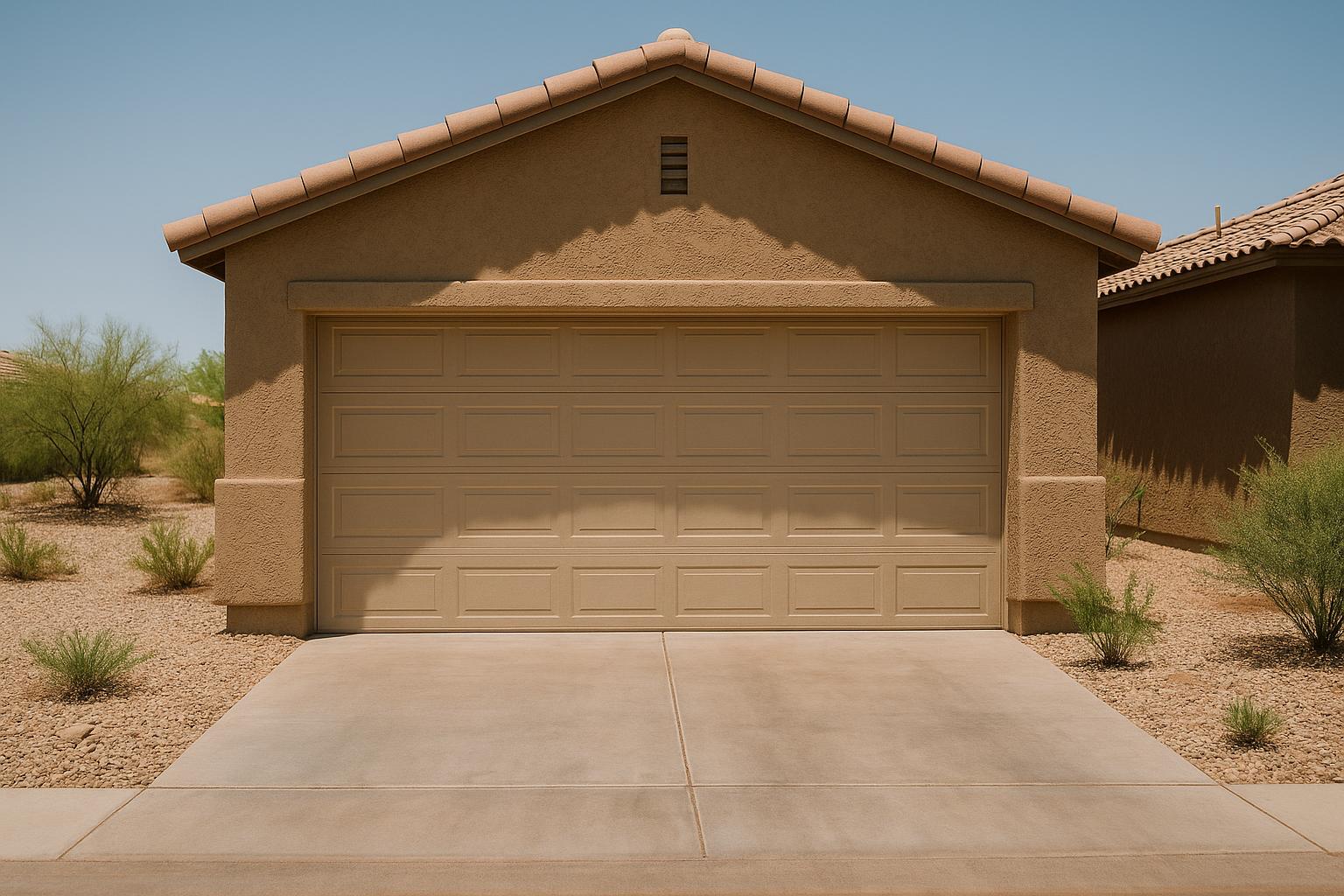
Your Garage Door vs. the Desert Sun
Living in Boulder City means enjoying over 300 days of sunshine a year, stunning views of Lake Mead, and a tight-knit community that's hard to beat. But it also means your garage door takes a beating from extreme heat that most homeowners don't think about until something goes wrong.
When summer temperatures regularly climb past 110°F, every component of your garage door — from the metal springs to the rubber seals to the electronic opener — is under stress. Understanding how desert heat affects your garage door can help you catch small problems before they turn into expensive repairs.
Warped and Faded Garage Door Panels
Direct sun exposure is one of the biggest threats to your garage door's appearance and function. Here in Boulder City, many homes face south or west, which means the garage door can absorb hours of intense UV radiation every day.
What happens:
- Steel doors can expand in the heat, causing them to bind or stick in the tracks.
- Wooden doors are especially vulnerable — they can warp, crack, and split as moisture is pulled out by the dry desert air.
- Paint and finishes fade significantly faster than they would in milder climates, leaving your door looking worn out well before its time.
- Vinyl and composite doors hold up better but can still become brittle after years of UV exposure.
If you've noticed your garage door looks uneven, doesn't sit flush when closed, or has visible cracks in the panels, heat damage is a likely culprit.
What You Can Do
Choose a light-colored door finish to reflect more sunlight. If your door faces west, consider adding a small awning or overhang if your HOA and home design allow it. Applying a UV-resistant exterior paint or sealant every few years can also extend the life of your panels considerably.
Garage Door Springs Under Thermal Stress
Your garage door springs do the heavy lifting — literally. They're under enormous tension every time the door opens and closes. Heat makes metal expand, and the constant cycle of expanding during the day and contracting at night accelerates metal fatigue.
What happens:
- Springs lose tension faster in extreme heat, which means your door may start to feel heavier or not stay open on its own.
- The expansion-contraction cycle can cause micro-fractures in the metal, leading to sudden spring failure.
- A broken spring is not just inconvenient — it can be dangerous. The snap releases a tremendous amount of stored energy.
Most garage door springs are rated for around 10,000 cycles (one cycle equals one open and one close). In the Boulder City climate, we often see springs wear out sooner than that estimate because of the thermal stress they endure.
What You Can Do
Have your springs inspected at least once a year, ideally before summer hits. A professional can check for signs of wear, corrosion, or weakening tension and replace springs before they snap unexpectedly. If your springs are more than five or six years old and you use your garage door multiple times a day, it's worth having them evaluated.
Garage Door Openers and Electronics
Your garage is essentially an oven when the door is closed on a hot day. Without insulation or ventilation, interior garage temperatures in Boulder City can easily reach 130°F or higher. That's brutal on electronic components.
What happens:
- The circuit board in your garage door opener can overheat, causing intermittent failures or complete burnout.
- Capacitors and wiring degrade faster in sustained high heat.
- The motor may overheat and shut down as a safety measure, especially if you're opening and closing the door frequently.
- Remote controls and wall-mounted keypads can also malfunction when exposed to extreme temperatures.
What You Can Do
If your garage isn't insulated, consider insulating at least the garage door itself. An insulated garage door can reduce interior temperatures by 10 to 20 degrees, which protects your opener and anything else you store in the garage. Make sure the opener's motor housing isn't caked with dust — desert dust buildup traps heat and reduces airflow around the motor. A quick wipe-down a few times a year goes a long way.
Weatherstripping and Seals Dry Out Fast
The rubber weatherstripping along the bottom and sides of your garage door is your first line of defense against dust, pests, and outside air. In our dry desert climate, these seals deteriorate much faster than they would in more humid regions.
Signs your seals need replacing:
- Visible cracks, gaps, or hardened rubber along the bottom seal
- Dust, sand, or debris blowing into your garage even when the door is closed
- Daylight visible under or around the edges of the door
- Small insects or even scorpions finding their way inside
Replacing weatherstripping is one of the most affordable maintenance tasks you can do, and it makes a noticeable difference in keeping your garage cleaner and more energy-efficient.
Lubrication Breaks Down Faster in the Heat
Moving parts like rollers, hinges, and tracks need regular lubrication to operate smoothly. High temperatures cause standard lubricants to evaporate or break down more quickly, which leads to increased friction, noise, and wear.
We recommend using a silicone-based or lithium-based lubricant rather than standard WD-40, which evaporates too quickly in the heat. Apply lubricant to all moving parts every three to four months during the warmer months — more often if you notice squeaking or grinding sounds.
A Simple Maintenance Schedule for Boulder City Homeowners
Staying ahead of heat-related damage doesn't require a lot of effort. Here's a straightforward schedule that works well for our climate:
- Spring (March-April): Schedule a professional inspection before the intense heat arrives. Have springs, cables, and the opener checked. Replace any worn weatherstripping.
- Early Summer (May-June): Lubricate all moving parts. Clean dust from the opener motor and sensors. Check the door's balance by disconnecting the opener and lifting the door manually — it should stay in place when opened halfway.
- Late Summer (August-September): Re-lubricate moving parts. Inspect panels for warping or paint damage. Check that the door seals tightly when closed.
- Fall (October-November): Do a final lubrication for the year. Test the auto-reverse safety features. Clean the tracks of any accumulated debris.
When to Call a Professional
Some maintenance tasks are safe for homeowners to handle — lubrication, visual inspections, and cleaning are all fair game. But anything involving springs, cables, or the opener's electrical components should be left to a trained technician. These systems are under high tension or carry electrical risk, and improper handling can lead to serious injury.
At Boulder City Garage Door, we work with homeowners and businesses across Boulder City, Henderson, Las Vegas, and the surrounding areas to keep garage doors running safely and smoothly despite the desert conditions. Whether you need a quick tune-up before summer or a full door replacement, we're here to help.
If your garage door has been acting up in the heat — sticking, making unusual noises, or not closing properly — don't wait for a complete failure. Give us a call and we'll get it sorted out before it becomes a bigger problem.