
Your Garage Door Shouldn't Sound Like That
You press the button, and instead of the smooth hum you're used to, your garage door lets out a grinding screech that makes the neighbors look over. Or maybe it's a rhythmic banging that shakes the walls every time the door goes up or down. Whatever the sound, one thing is clear — something isn't right.
A noisy garage door is more than just an annoyance. In many cases, those strange sounds are early warning signs of mechanical problems that will get worse (and more expensive) if you ignore them. The good news is that most garage door noises point to specific, identifiable issues that a trained technician can resolve quickly.
Here at Boulder City Garage Door, we hear about noisy doors all the time from homeowners across Boulder City and the surrounding areas. Let's break down the most common sounds, what causes them, and what you should do about each one.
Grinding or Scraping Sounds
A grinding or scraping noise usually means metal is rubbing against metal somewhere it shouldn't be. The most common culprits include:
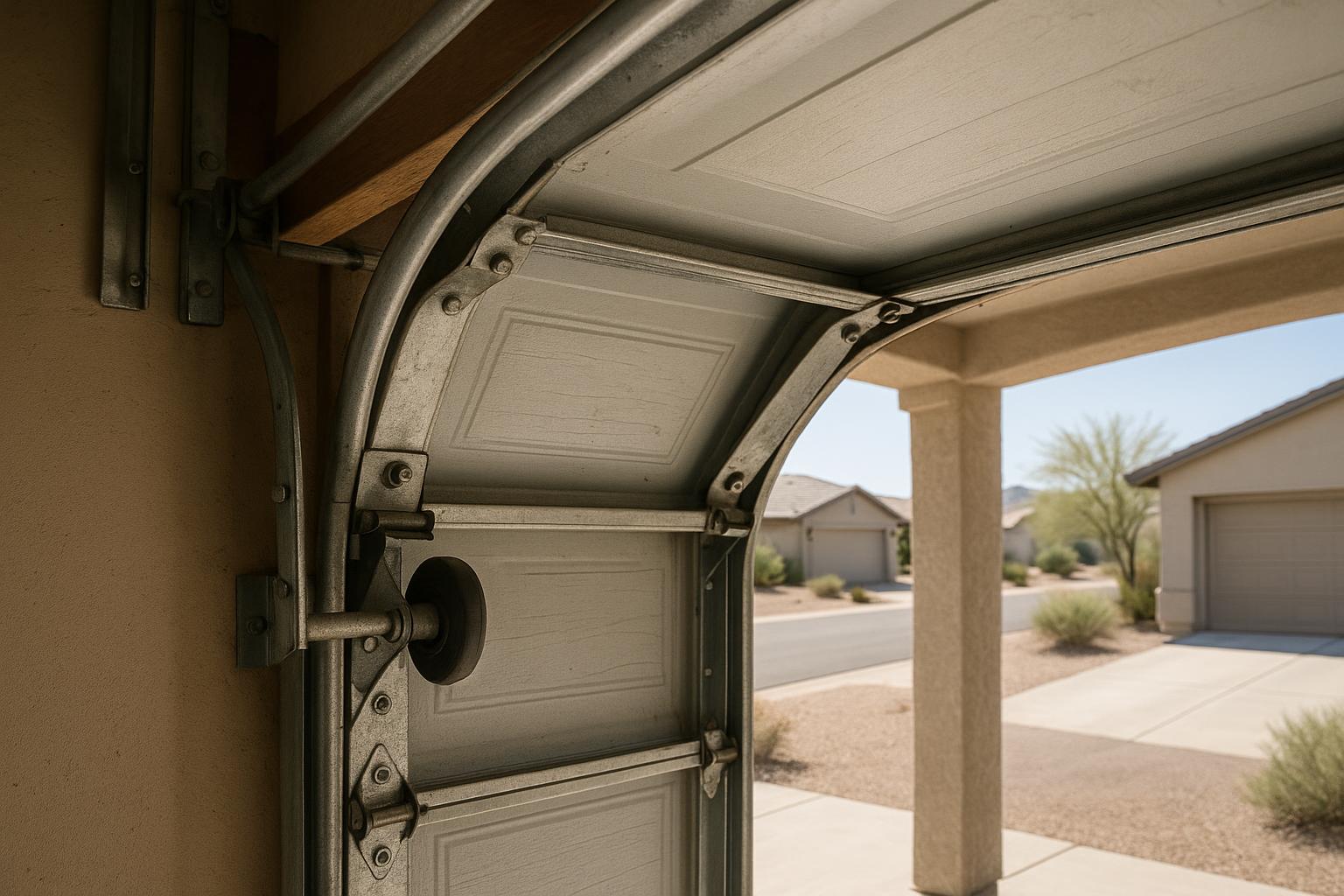
- Worn-out rollers: Steel rollers can wear down over time, especially in Boulder City's dry climate where dust and grit accelerate the process. When the rollers lose their smooth surface, they grind against the track as the door moves.
- Misaligned tracks: If your tracks have shifted even slightly — from a bump, settling foundation, or loose mounting brackets — the door can scrape against the track edges as it travels up and down.
- Lack of lubrication: Garage door components need periodic lubrication to operate smoothly. Without it, metal-on-metal contact creates that unmistakable grinding sound.
If you're hearing grinding, start by visually inspecting the rollers and tracks. Look for visible wear, debris buildup, or gaps between the rollers and the track. Applying a garage door-specific lubricant can sometimes quiet things down temporarily, but worn rollers and bent tracks need professional attention.
Squealing or Squeaking Noises
High-pitched squealing is one of the most common complaints we hear from homeowners. It's usually caused by:
- Dry hinges and bearings: The hinges that connect your door panels and the bearings inside your rollers need lubrication to function quietly. When they dry out, they squeal.
- Torsion spring friction: As torsion springs coil and uncoil, they can produce a squeaking sound if the coils are rubbing together without adequate lubrication.
- Worn weather stripping: Sometimes the squeal isn't coming from the mechanical components at all — it's the rubber weather seal along the bottom of the door dragging across the concrete floor.
A good-quality silicone-based or lithium-based lubricant applied to hinges, rollers, springs, and bearing plates can often eliminate squealing. Avoid using WD-40 as a long-term solution — it's a solvent, not a true lubricant, and it tends to attract dust in our desert environment.
Rattling or Vibrating Sounds
If your garage door sounds like it's shaking apart, you're probably dealing with loose hardware. Over thousands of open-and-close cycles, nuts, bolts, and screws gradually loosen. This is completely normal, but it does need to be addressed.
Common sources of rattling include:
- Loose track brackets: The brackets that secure the tracks to the wall and ceiling can vibrate loose over time.
- Loose chain or belt: If you have a chain-drive opener, a sagging chain will slap and rattle during operation. Belt-drive openers can also develop slack.
- Worn opener mounting: The garage door opener itself is bolted to the ceiling. If those fasteners loosen, the entire unit can vibrate and rattle with each cycle.
You can tighten most visible bolts and screws yourself with a socket wrench, but be careful not to overtighten — and never attempt to adjust anything connected to the springs or cable system without professional help.
Banging or Popping Sounds
A loud bang or pop is the noise that worries homeowners the most — and for good reason. These sounds can indicate:
- Spring issues: A loud bang could mean a spring has broken or is under extreme tension. Torsion and extension springs are under tremendous force, and any sudden release of that energy creates a startling noise. If you hear a single loud bang and your door won't open, a broken spring is the most likely cause.
- Panel problems: Warped or damaged panels can pop as they flex during operation. This is especially common in older doors that have endured years of temperature swings here in the desert.
- Track obstructions: If something is caught in the track — a small rock, a piece of debris, or even a bent section of track — the rollers can pop as they pass over the obstruction.
Banging noises related to springs should always be handled by a professional. Garage door springs are the most dangerous component of the system, and attempting a DIY repair can result in serious injury.
Humming or Buzzing Without Movement
If you press your garage door button and hear the opener humming or buzzing but the door doesn't move, the motor is running but can't drive the door. This can happen when:
- The door is locked or obstructed: Check that the manual lock isn't engaged and that nothing is blocking the door's path.
- The drive gear is stripped: Inside chain-drive and belt-drive openers, a small plastic or nylon gear connects the motor to the drive mechanism. These gears wear out and strip, causing the motor to spin without actually moving the chain or belt.
- A spring has broken: Without functioning springs to counterbalance the door's weight, the opener motor simply can't lift it. The motor strains, hums, and eventually the thermal overload protection shuts it down.
If the motor runs but nothing moves, stop trying to operate the door. Continuing to press the button can burn out the motor or cause further damage to internal gears.
When to Call a Professional
Some garage door noises can be resolved with basic maintenance — a little lubricant, a few tightened bolts. But many noises signal problems that require professional diagnosis and repair. As a general rule, call a technician when:
- The noise is sudden and new
- You hear a loud bang followed by the door not working
- The noise is accompanied by the door moving unevenly or getting stuck
- You suspect the issue involves springs, cables, or the opener's internal components
- Basic lubrication and tightening don't resolve the problem
At Boulder City Garage Door, we provide thorough inspections and honest assessments. We'll pinpoint the source of the noise, explain what's going on in plain language, and give you a clear quote before any work begins. We serve homeowners and businesses throughout Boulder City, Henderson, Las Vegas, and the surrounding communities.
Preventive Maintenance Keeps Things Quiet
The best way to avoid a noisy garage door is to stay ahead of problems with regular maintenance. A professional tune-up once or twice a year includes lubrication of all moving parts, tightening of hardware, inspection of springs and cables, track alignment checks, and opener testing. It's a small investment that extends the life of your door, keeps it running quietly, and helps you avoid unexpected breakdowns.
If your garage door has been making noises that don't sound right, don't wait for a small issue to become a big one. Give us a call or schedule a service appointment — we'll get your door running smoothly and quietly again.