
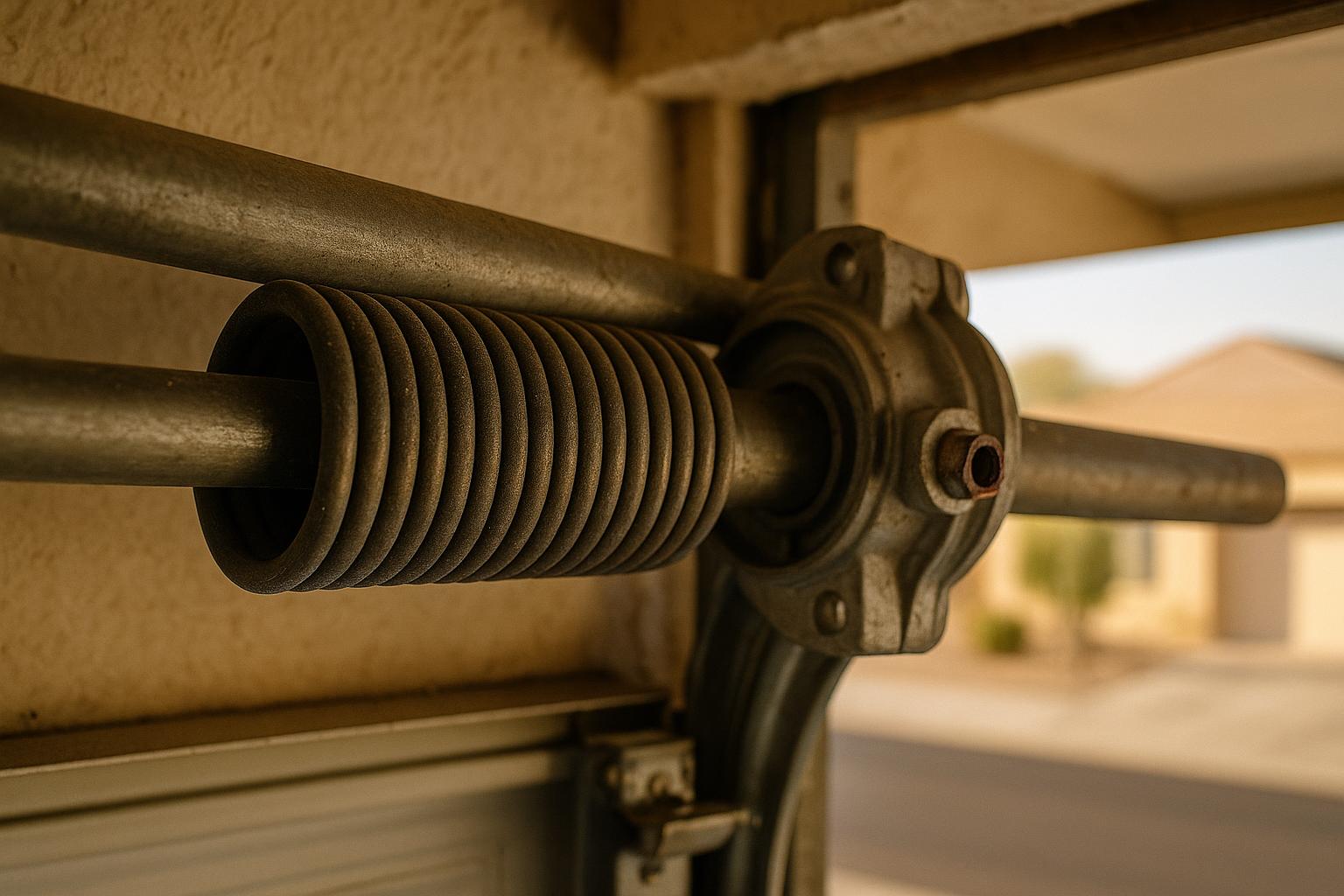
Your Garage Door Springs Are Under More Stress Than You Think
Every time you open and close your garage door, the springs do the heavy lifting — literally. A standard residential garage door weighs between 130 and 350 pounds, and the springs are responsible for counterbalancing all of that weight. Over time, the metal fatigues, and eventually, the springs will fail.
For homeowners in Boulder City, spring wear can happen faster than you'd expect. The combination of daily use, temperature swings between scorching summer days and cool desert nights, and the dry climate all take a toll on spring longevity. Knowing the warning signs of a failing spring can save you from a sudden breakdown — or worse, a safety hazard.
How Garage Door Springs Work
Before diving into the warning signs, it helps to understand the two main types of garage door springs:
- Torsion springs — Mounted on a metal shaft above the garage door opening. They use torque to lift and lower the door in a controlled manner. Most modern residential doors use torsion springs.
- Extension springs — Mounted on either side of the door, running parallel to the horizontal tracks. They stretch and contract to provide lifting force. These are more common on older or lighter doors.
Both types are rated for a specific number of cycles, with one cycle being a single open-and-close. A standard spring is rated for about 10,000 cycles, which translates to roughly 7 to 10 years of average use. High-cycle springs can last significantly longer, but no spring lasts forever.
7 Warning Signs Your Springs Are Failing
1. The Door Feels Heavier Than Usual
Try this simple test: disconnect the opener by pulling the emergency release cord, then manually lift the door about halfway. A properly balanced door should stay in place on its own. If it feels unusually heavy, slams down, or won't stay open, your springs are losing tension and can no longer support the door's weight.
2. The Door Opens Unevenly or Crooked
If one side of your garage door rises faster than the other, it often means one spring is weaker than its counterpart. This is especially common with extension spring systems where each side operates somewhat independently. An uneven door puts extra strain on the tracks, rollers, and opener, which can lead to additional problems if not addressed.
3. You Hear Loud Squeaking or Popping Sounds
Some noise during operation is normal, but new or worsening squeaking, grinding, or popping sounds can indicate that the spring coils are binding, rusting, or starting to separate. If you hear a loud bang coming from your garage — almost like a firecracker — a spring may have already snapped.
4. Visible Gaps in the Spring Coils
Take a look at your torsion spring above the door. A healthy spring has tightly wound, evenly spaced coils. If you notice a visible gap — a section where the coils have separated — the spring has broken. Even a small gap means the spring is no longer functioning properly and needs immediate replacement.
5. The Opener Struggles or Stops Mid-Cycle
Your garage door opener is designed to work with the springs, not to do all the work alone. When springs weaken, the opener has to compensate by working harder. You might notice the motor straining, the door moving slower than usual, or the opener stopping partway through a cycle. Running the opener under these conditions can burn out the motor prematurely.
6. Rust on the Springs
While Boulder City's dry desert air means less humidity than coastal areas, rust can still develop on garage door springs over the years — especially if the garage isn't well-ventilated or if the springs haven't been lubricated regularly. Rust increases friction between the coils and weakens the metal, accelerating wear and shortening the spring's lifespan.
7. The Door Closes Too Fast
A garage door should lower smoothly and at a controlled speed. If your door drops quickly or slams shut, the springs are no longer providing adequate resistance. This is a serious safety concern, particularly for households with children or pets. A falling garage door can cause significant injury or property damage.
Why You Should Never Replace Springs Yourself
We understand the DIY spirit — many Boulder City homeowners are handy and prefer to tackle projects on their own. But garage door springs are one job that should always be left to professionals. Here's why:
- Extreme tension: Torsion springs are wound under tremendous force. A spring that releases unexpectedly can cause severe injury or death.
- Specialized tools required: Proper spring replacement requires winding bars, clamps, and precise calibration that most homeowners don't have.
- Matching matters: Springs must be matched to your door's exact weight, height, and track configuration. The wrong spring can damage the door or create an unsafe operating condition.
Professional technicians have the training, tools, and experience to replace springs safely and correctly. At Boulder City Garage Door, our team handles spring replacements every day — we know how to get it done quickly without cutting corners on safety.
How to Extend the Life of Your Springs
While you can't prevent springs from eventually wearing out, you can slow the process and get more years out of them:
- Lubricate regularly — Apply a silicone-based or white lithium grease lubricant to your springs every three to four months. This reduces friction and helps prevent rust.
- Schedule annual maintenance — A professional tune-up includes inspecting springs, checking balance, tightening hardware, and identifying early signs of wear before they become emergencies.
- Upgrade to high-cycle springs — If your springs are due for replacement, consider investing in high-cycle springs rated for 25,000 or even 50,000 cycles. They cost more upfront but last significantly longer.
- Minimize unnecessary cycles — Every open and close counts. If household members are opening the door multiple times a day when they could use the house entry instead, those extra cycles add up over the years.
Don't Wait for the Snap
A broken garage door spring is more than an inconvenience — it can leave your car trapped inside, compromise your home's security, and create a dangerous situation for your family. If you've noticed any of the warning signs described above, it's time to have your springs inspected.
Boulder City Garage Door provides fast, reliable spring replacement for homes and businesses throughout Boulder City, Henderson, and the surrounding areas. We carry a wide selection of springs on our service vehicles, which means most replacements can be completed in a single visit.
Give us a call to schedule an inspection or spring replacement. We'll show up on time, give you an honest assessment, and get your door operating safely again.